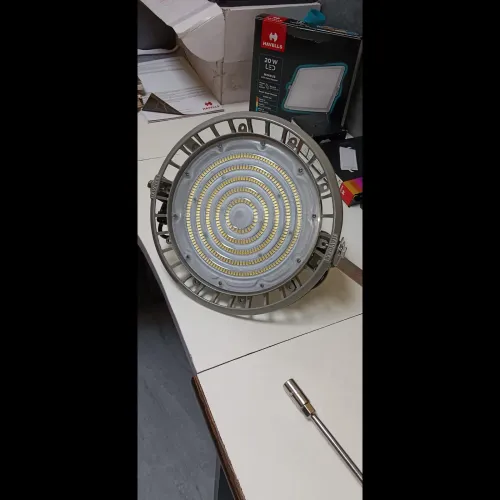

Warehouse illumination can become challenging once rack height increases. Fixtures may appear bright from below yet fail to deliver useful light onto vertical rack faces, picking locations, aisle floors. Effective Warehouse Lighting Solutions should therefore account for the actual storage layout before fixture positions are finalised.
For warehouses plus logistics facilities across Pune, Maharashtra, this planning can improve visibility while reducing unnecessary fixture installation.
Begin With the Rack Layout
Lighting design should follow the warehouse layout rather than precede it.
The designer needs to know:
- Rack height
- Aisle width
- Picking levels
- Cross aisles
- Loading zones
- Open storage sections
- Packing stations
- Material handling routes
A fixture located directly above a rack can waste useful illumination if the primary task occurs within the aisle.
High Racks Can Create Shadows
Tall storage racks physically block light.
A broad beam that works well in an open shed may perform poorly in a narrow aisle because much of its output reaches the rack tops rather than the aisle surface.
Optical distribution should therefore suit the geometry of the warehouse.
Lighting calculations can help identify potential dark zones before installation.
Forklift Operators Need Consistent Visibility
Warehouse lighting affects more than workers picking items.
Forklift operators need clear visibility of aisle boundaries, rack structures, loads, pedestrians, floor markings.
Sudden changes between bright sections plus dark sections can reduce visual comfort.
A reasonably uniform layout helps people adapt more easily while moving through the facility.
Picking Areas Need Task-Focused Illumination
Warehouses increasingly depend on accurate picking.
Employees may need to read labels, scan barcodes, identify small product codes, check packaging.
The required visual conditions can therefore differ from those in bulk storage sections.
Where detailed work occurs regularly, local task requirements should be assessed separately from general warehouse illumination.
Motion-Based Controls Can Be Useful
Some warehouse aisles remain unoccupied for long periods.
In suitable applications, occupancy-based controls can reduce unnecessary operating time.
The control strategy needs careful planning so workers never enter an inadequately illuminated active area.
Sensor positioning, response time, switching zones should reflect actual movement patterns.
Compare Energy Use at System Level
A purchasing team may compare two individual fixtures based on wattage.
Warehouse managers should instead examine the complete installation.
For example, fixture efficiency, quantity, operating hours, controls, layout all influence total electricity use.
A well-designed system may achieve required visibility using fewer appropriately positioned fixtures compared with a poorly planned installation containing many high-wattage units.
Maintenance Can Disrupt Warehouse Operations
Fixtures installed above tall racks can be difficult to reach.
Maintenance work may require aisle closure plus elevated access equipment.
This creates potential disruption to daily warehouse operations.
When evaluating products, consider expected service life, driver accessibility, mounting quality, replacement availability.
Fixture placement should also allow maintenance teams to work safely.
Expansion Plans Matter
Warehouse layouts frequently change.
A company may add racks, increase storage height, modify aisle widths, install automation.
Lighting that works for today's open floor may become unsuitable after expansion.
Facilities expecting layout changes should discuss future storage plans during the lighting design process.
Request a Site-Based Recommendation
A meaningful Warehouse Lighting Solutions proposal should be based on dimensions plus operating conditions.
For a Pune warehouse, useful information can include building height, rack layout, existing fixture positions, working hours, required task visibility, electrical arrangement.
Photographs can provide initial context, although measurements plus layout drawings offer better technical information.
Vedant Lights India Pvt. Ltd. can be evaluated alongside other suitable providers by checking whether recommendations are based on site requirements rather than generic fixture quantities.
A warehouse lighting project should ultimately support visibility where work actually happens. Rack geometry, aisle conditions, picking tasks, controls, maintenance access need to be considered together before procurement begins.
Keywords